High-Speed Hygiene & Commercial Bottle Washing: An Operational and Technical Guide for Restaurants and Hotels
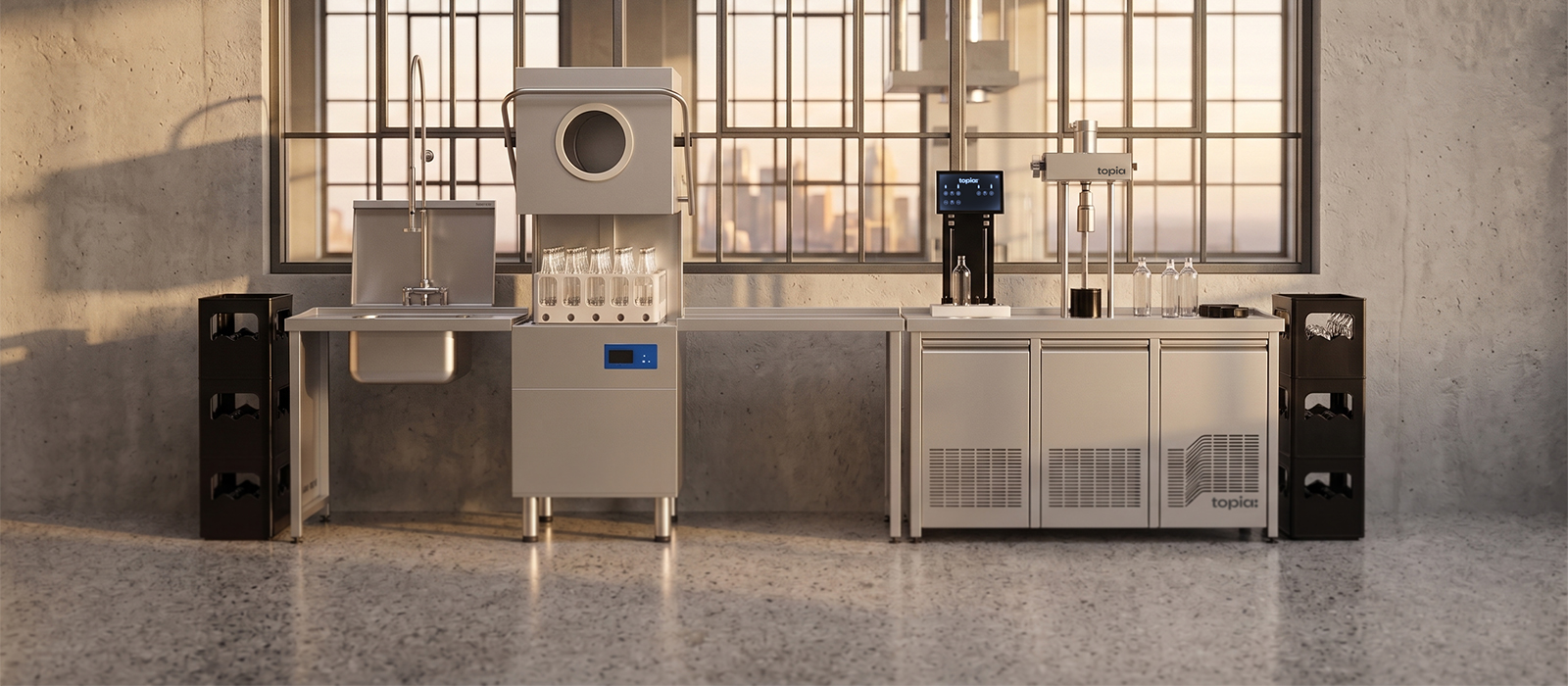
Commercial food service operations and luxury hotel properties face increasing pressure to eliminate single-use plastic bottles without sacrificing operational speed or hygiene standards. While transitioning to an in-house glass water bottling program eliminates packaging waste and reduces beverage costs, the operational viability of any circular bottling system depends on bottle washing efficiency and hygiene control. Manual washing of reusable glass bottles introduces severe labor bottlenecks, inconsistent sanitization, and elevated risk of glassware breakage.
A dedicated commercial bottle washer provides the technical solution to these operational hurdles. By combining high-temperature wash cycles, precise thermal rinsing, and specialized 24-bottle rack geometry, modern commercial bottle washers ensure complete internal sanitation while processing hundreds of bottles per hour in a compact dishroom footprint.
The Hygiene Imperative: Solving Commercial Glass Bottle Sanitization
Reusing glass bottles in high-volume dining rooms, hotel banquet halls, and guest rooms requires absolute cleanliness and sanitation. Standard commercial dishwashers designed for flat plates and open glassware often fail to thoroughly cleanse narrow-neck bottles. High-velocity water jets from standard dishwashing spray arms cannot penetrate the narrow opening of a bottle, leaving internal surfaces, bases, and threads susceptible to residual moisture, biofilm accumulation, and municipal chlorine odors.
Manual washing using hand brushes is equally problematic. Hand washing is highly labor-intensive, leads to inconsistent cleanliness, increases glass breakage rates, and leaves staff vulnerable to thermal discomfort or sharp glass injuries. Furthermore, modern guests expect pristine presentation; any visual film or lingering odor compromises brand trust and guest perception.
Thermal Sanitization Mechanics
Achieving HACCP-compliant sanitization without chemical residue requires high-temperature thermal washing. A commercial bottle washer utilizes a dual-stage thermal cycle:
- Detergent Wash Phase (65°C): High-pressure water nozzles positioned directly beneath each bottle neck inject 65°C water mixed with low-foaming commercial detergent, breaking down organic soils, residue, and natural oils.
- Thermal Rinse Phase (95°C): Fresh water heated to 95°C is injected into every bottle cavity. This high-temperature thermal rinse cleanses internal surfaces within seconds while rinsing away all detergent traces.
- Controlled Thermal Transition: To prevent thermal shock—which causes glass stress or cracking when transitioning from 95°C hot water to cold filling environments—the machine manages water volume and drain timing to allow gradual thermal stabilization.
By relying on 95°C thermal sanitization rather than heavy chemical sanitizers, restaurants and luxury hotels ensure that bottled still and sparkling water remains completely free from chemical off-flavors, preserving the natural mineral taste profile of polished water.
Operational Throughput & Workflow Optimization
In a busy hotel kitchen or high-volume fine dining restaurant, dishroom throughput dictates service speed. A bottling program that relies on manual washing creates severe operational friction, pulling stewards away from core kitchen support tasks.
A purpose-built commercial bottle washer streamlines the entire reconditioning workflow by introducing standardized rack loading and rapid cycle programming.
Operational Advantages of Dedicated Bottle Washers
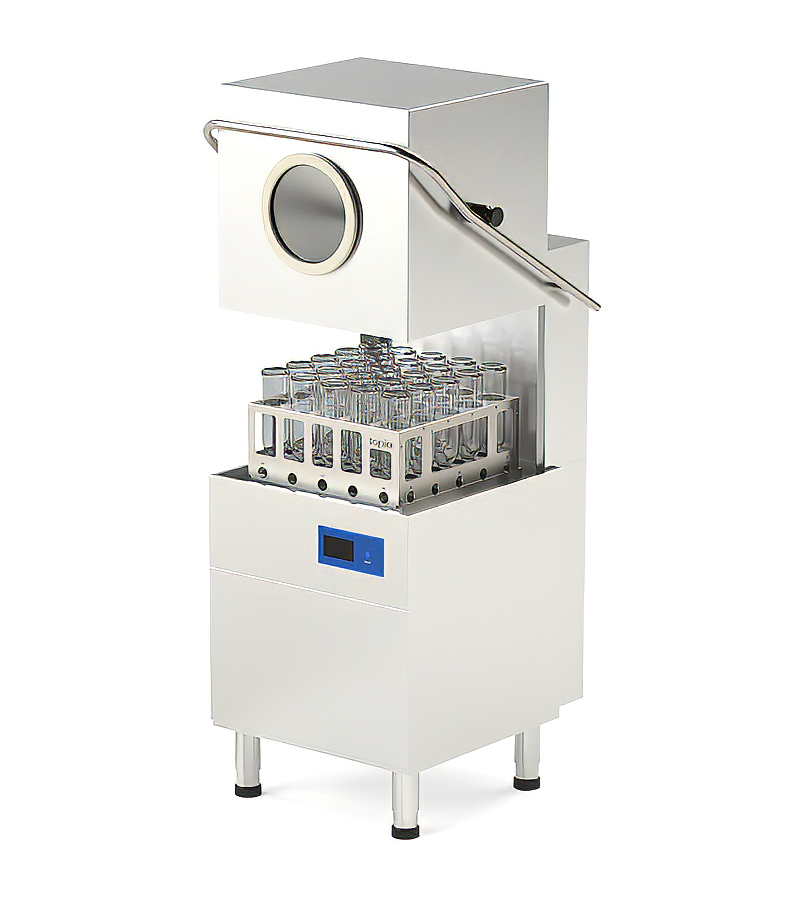
- High-Density Rack Configuration: Dedicated bottle washers utilize specialized 500 x 500 mm racks equipped with internal injection manifolds. Each rack securely holds 24 bottles, keeping each bottle vertically aligned over an individual wash jet to guarantee 100% internal coverage.
- Rapid Wash Cycle Selection: Operators can choose between 60-second, 90-second, and 120-second cycle times based on soil levels. At a standard 90-second wash cycle, a single machine can process up to 400 to 500 bottles per hour with minimal manual labor.
- Low Water Consumption: Modern commercial bottle washers use as little as 2 Liters of fresh water per wash cycle, drastically reducing water and heating energy usage compared to continuous manual rinsing under running taps.
- Labor Reduction & Ergonomics: Stewards simply load dirty bottles directly into 24-bottle crates at server stations, slide the full rack into the washer, push one button, and transfer the sanitized rack straight to the bottling station.
Technical Product Showcase: The Topia Commercial Bottle Washer
The Topia Commercial Bottle Washer is engineered specifically to integrate into high-volume hotel bottling rooms, commercial kitchens, and automated production environments. Built with heavy-duty commercial-grade stainless steel and precision thermal controls, it delivers rapid, repeatable sanitization for luxury reusable glass bottle programs.
Technical Specifications Summary
The table below outlines the core engineering parameters of the Topia Commercial Bottle Washer:
| Specification Metric | Technical Parameter | Operational Benefit |
|---|---|---|
| Machine Footprint (W x D x H) | 766 mm x 830 mm x 1425 mm | Fits comfortably into compact dishrooms and dedicated 9 sqm bottling spaces |
| Rack Capacity | 24 Bottles per Rack | Maximizes batch throughput while ensuring secure vertical positioning |
| Rack Dimensions | 500 mm x 500 mm | Standard commercial dishroom footprint compatible with universal transport dollies |
| Wash Cycle Programs | 60 / 90 / 120 Seconds | Flexible timing allows fast turnarounds during peak service rushes |
| Water Consumption | 2.0 Liters per Cycle | Highly sustainable water efficiency, lowering utility operating costs |
| Wash Temperature | 65°C | Effectively dissolves organic soils and surface contaminants |
| Rinse Temperature | 95°C | Enforces maximum thermal sanitization for high hygiene standards |
| Electrical Supply | 380V / 3-Phase / 50-60Hz | High-capacity commercial power for instant thermal recovery between cycles |
| Max Connected Load | 14 kW | Rapid heating element response ensures continuous back-to-back rack operation |
Integration into Topia Streamline Production Lines
The Topia Bottle Washer serves as the foundational hygiene engine across Topia’s automated bottling plants:
- Streamline 100 System: Integrates the Topia Bottle Washer alongside a manual or semi-automatic filling and capping bench in a compact 9 square meter footprint, delivering 250 to 300 bottles per hour.
- Streamline 200 System: Pairs the Topia Bottle Washer with an automated filling chassis, processing 400 to 500 bottles per hour for mid-sized hotels and large event venues.
Summary: Delivering Hygiene, Speed, and Sustainability
Installing a dedicated commercial bottle washer like the Topia Bottle Washer bridges the gap between sustainability goals and daily operational realities. By automating internal bottle sanitization at 95°C, commercial kitchens and hotel bottling plants eliminate hand-washing labor, guarantee guest safety, protect delicate water flavor profiles, and maintain rapid service throughput.
Whether operating as a standalone unit in a restaurant dishroom or integrated into a full Topia Streamline production line, automated bottle washing is the indispensable foundation of a successful zero-plastic water program.